
How to Write a Book Outline Step by Step: A Complete Guide
Writing a book after creating an outline is not just a writing practice, but also a life saving technique for the days are writing motivation has the structural integrity of a wet biscuit.
A solid book outline doesn’t kill creativity. It unlocks it. It gives your brain a scaffolding to hang ideas on, a way to move through the fog of Act Two without crying, and a reason to keep going when the honeymoon phase is over and you’re 17,000 words deep in chaos.
Even discovery writers can benefit from a loose roadmap. It doesn’t have to be rigid. It just has to exist. Outlining won’t make you a better writer overnight, but it will make you a writer who finishes things. And that’s where the magic happens.
What Is a Book Outline?
At its core, a book outline is a roadmap. Writers use outlines to sketch the bones of their story, whether that’s a detailed scene-by-scene breakdown, a broad chapter outline, or a few bullet points scribbled in a notes app at 2 a.m. There’s no one-size-fits-all format. What matters is that it works for you.
A detailed outline might include plot points, character arcs, turning points, and even snippets of dialogue. A chapter-by-chapter summary gives a higher-level view, what happens in each section, and why it matters.
Whichever you choose, the goal is the same: to see the shape of your story before you’re knee-deep in subplots.
Outlining helps you stay focused on the big picture while still leaving room for creative detours. A solid outline makes finishing the draft feel possible, even exciting. Learning how to write a book outline step by step can help you organize ideas before beginning the full book writing process. For beginners learning how to write a book, an outline can provide a practical starting point and help turn an initial idea into a workable plan.
Choosing the Right Outlining Method for Your Book
There’s no universal formula for creating a perfect book outline. The truth is, different writers thrive with different systems. Some want structure. Others want freedom with a safety net. Your ideal outlining method might depend on what you’re writing, novel, memoir, nonfiction bestseller, first-time thriller, or a deeply in-depth exploration of a subject.
Here are a few popular book outlining methods that actually work.
For Fiction Writers
Fiction writers can use classic storytelling frameworks to structure a novel, strengthen the plot, and maintain a clear narrative flow. Popular book outlining methods include the Three-Act Structure, which divides a story into setup, conflict, and resolution; the Hero’s Journey, which focuses on character transformation; and the Snowflake Method, which expands a one-sentence summary into scenes and chapters. Writers can also use index cards to rearrange scenes or mind mapping to connect characters, themes, and plotlines.
For Nonfiction Writers
Nonfiction outlining focuses on presenting ideas clearly and guiding readers through a subject. Writers can use the Problem/Solution Framework to address a reader’s problem, chronological structure to organize events, or the Big Idea + Evidence method to support a central argument. A modular or topic-based outline works well for essays, how-to guides, and case studies. Authors can also combine methods to create a nonfiction book outline that organizes research, examples, and key arguments while maintaining a logical structure.
Fiction Book Outline: Structuring Your Story for Maximum Impact
A strong fiction book outline helps writers pace the plot, develop characters, and build a compelling story structure. Key elements include the inciting incident, major plot points, character arcs, subplots, and climax and resolution. These elements strengthen character development and create a more engaging reading experience.
Nonfiction Book Outline: Organizing Information for Clarity and Impact
A clear nonfiction book structure helps organize ideas and guide readers through a subject. Define the central theme, divide content into logical sections, support ideas with research and examples, and create chapter summaries. Customize outlining templates to maintain your unique voice and ensure the book delivers a clear, meaningful message.
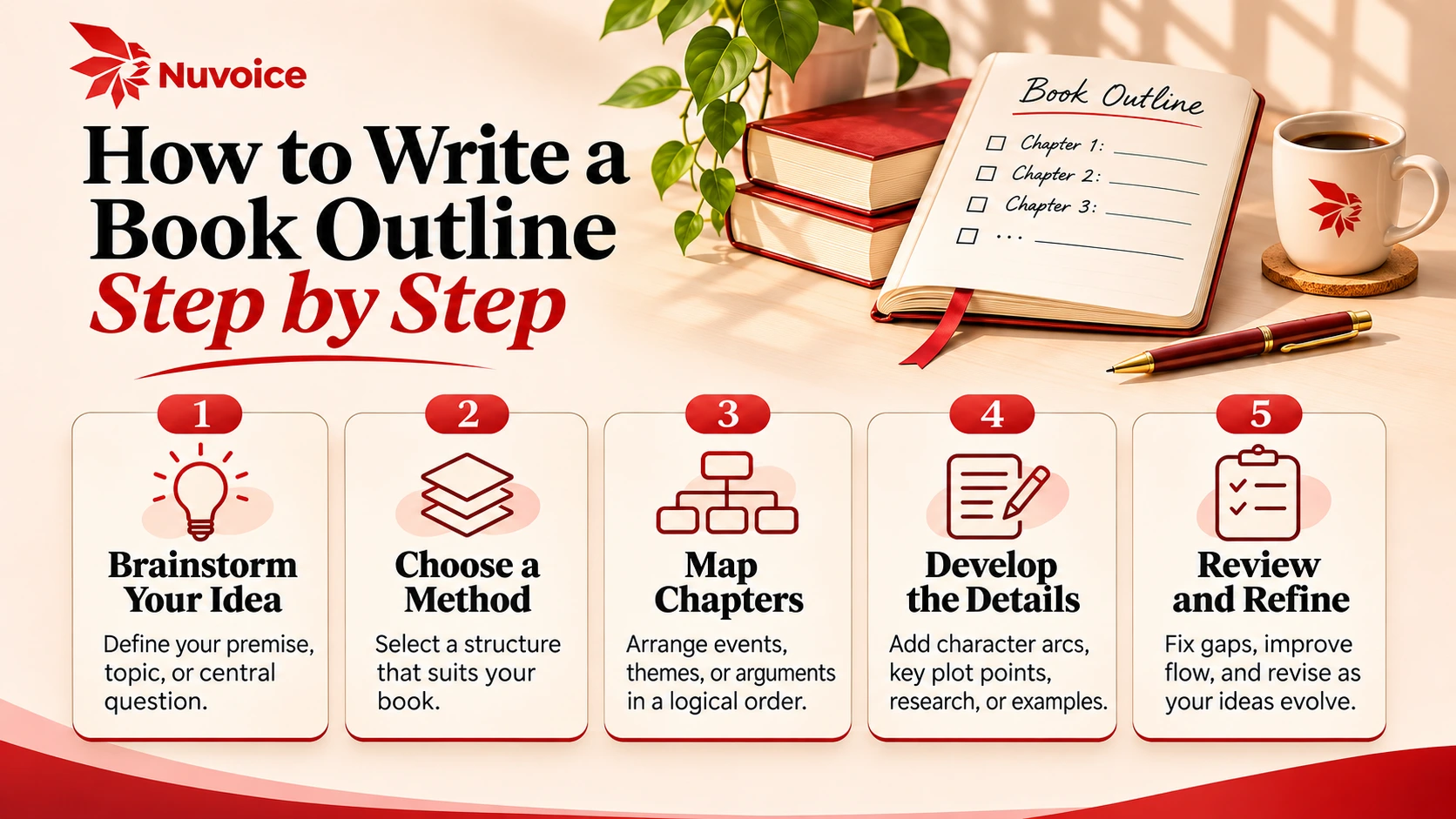
How to Write a Book Outline Step by Step
Outlining isn’t just about structure, it’s how you turn “vague idea” into “finished manuscript.” Whether you’re outlining your novel, mapping a memoir, or organizing thought leadership, here’s how to break it down into manageable, focused steps. These steps can also help you understand how to write a book and publish it, starting with a clear plan before moving towards a complete manuscript.
1. Brainstorm Your Idea
What’s the core concept driving your book? For fiction, think genre, premise, and the emotional arc. For nonfiction, define the key problem, question, or big idea.
2. Choose an Outlining Method
Pick a framework that fits your brain and your project. This gives your outline bones, so you’re not just throwing spaghetti at the plot wall.
3. Map Out the Key Sections
These are your foundational beats: acts, chapters, or themes. Lay them out to ensure flow and progression, so the story or argument builds naturally and doesn’t sag in the middle.
4. Develop Character Arcs or Core Arguments
For fiction, track your main character’s emotional and narrative transformation. For nonfiction, map out how your key argument unfolds and how each chapter contributes to it.
5. Refine with Subplots, Themes, and Supporting Details
Now layer in the richness. What recurring themes show up? Where do subplots deepen your narrative or illustrate your point? This is where a solid outline becomes a compelling book.
Your first outline is a draft too. Don’t be precious, revise it as your book evolves. Great books often come from outlines that were bold enough to start messy and smart enough to get sharper with time.
Benefits of a Book Outline
Creating an outline for your book provides you with organization and structure that you’ll be able to utilize at the beginning, middle, and end processes of writing your book. By writing an outline first, it will also:
Help you write quickly.
Allow you to start right off the bat.
Let you avoid writer’s block.
Help you stay motivated.
Be seen as a first draft.
Once you start the process of jotting down your ideas, you may be surprised to realize exactly how knowledgeable you are about a topic.
Getting started on anything as weighty as writing a book can leave you feeling overwhelmed, but getting a clear outline in place can make the task of actually writing your book feel a great deal more achievable. A practical book outlining guide can help you approach the writing process one step at a time without losing sight of your main idea.
Every great book starts with a good idea, and a smart plan. Your book or plot outline isn’t just a nice-to-have; it’s your best weapon against plot holes, pacing issues, and the dreaded second-act slump.
Once your manuscript is ready, the next stage is understanding the book publishing process and choosing the right publishing support for your goals. Nuvoice, a publishing imprint of Hubhawks, helps authors explore publishing and promotional services that can support their journey from manuscript to published book. For writers looking into how to write a book and publish it, understanding the next steps after completing a manuscript can help them prepare for publication.
For authors considering self publishing in India, choosing a publishing partner means looking beyond the name. Book editing services, book cover design services, formatting, printing, distribution, marketing support, costs, and author rights are all important factors to understand before making a decision.
Nuvoice can help authors explore relevant book publishing services and understand the steps involved in preparing their books for publication. Its support can be particularly useful for writers who need guidance through production and promotion. For authors seeking publishing houses in India, it is important to compare the services offered, understand the terms, and choose a partner whose support matches their goals.
Authors should review the scope, costs, rights, and deliverables offered in their individual package before proceeding. This helps them make a more informed decision when choosing a publishing partner.
If you’re ready to move from an outline to a completed manuscript, remember that planning is only the beginning. Keep writing, review your work, and choose the next steps that suit your book and your goals.
Ready to Submit Your Book or Pitch?
Our editorial team actively reviews manuscript pitches and literary submissions. Submit your manuscript to Kevin Missal's Nu Voice Press today.